Leave Your Message

China Best Water Ice Vape Manufacturers for Global Buyers

China remains a major sourcing base for regulated vapor products, including Water Ice Vape formats designed for compliant international markets. Grand View Research reported continued growth in the global e-cigarette market, driven by product variety, manufacturing scale, and retail expansion. However, growth alone does not prove product quality. Buyer judgment still matters.

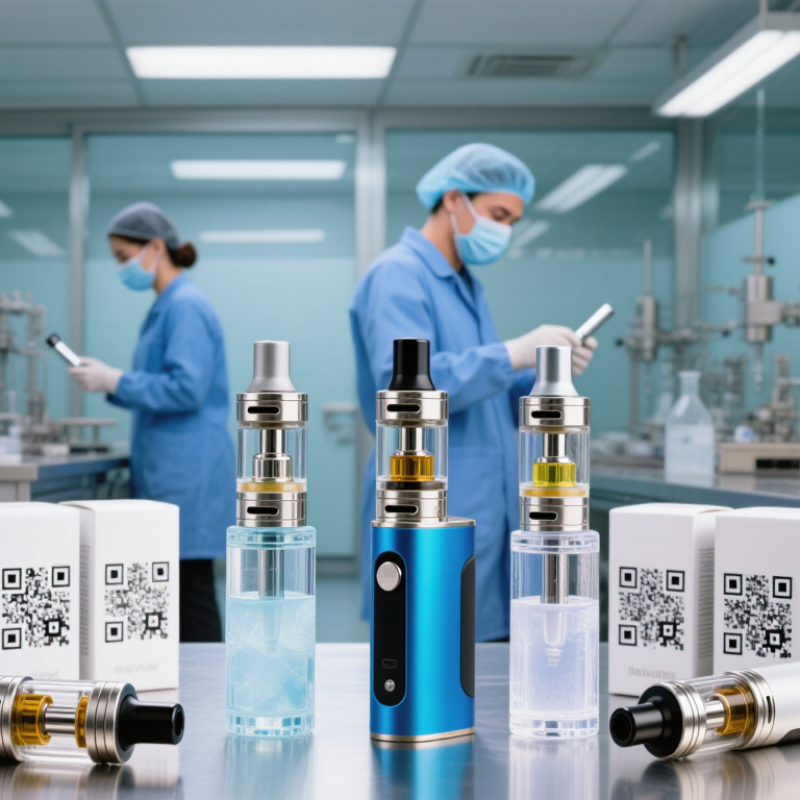
A reliable manufacturer should demonstrate documented quality systems, traceable materials, controlled filling rooms, and batch-level testing. Practical evidence includes sealed cartons, readable lot codes, leak checks, and laboratory reports for e-liquid composition. These details are easy to overlook. They should not be.

The World Health Organization’s tobacco-related reports continue to stress strict regulation, youth protection, health warnings, and responsible product control. Requirements vary across countries, so global buyers must verify destination-market rules before placing orders. The U.S. FDA, the European Union’s Tobacco Products Directive, and national customs authorities may require different documentation, labeling, packaging, and market authorization.

This guide examines Chinese Water Ice Vape manufacturers through a procurement and compliance lens. It considers production experience, testing capability, export documentation, customization control, and after-sales reliability. Supplier claims should be checked against independent certificates and sample inspections.

Some market data is inconsistent. That is normal. Report definitions, regional coverage, and legal product categories differ. Therefore, buyers should avoid choosing suppliers based only on capacity, low prices, or attractive flavor catalogs. The stronger question is simple: can the manufacturer provide consistent, lawful, and verifiable products for the intended market?

China Best Water Ice Vape Manufacturers for Global Buyers

Understanding Water Ice Vape Products and Their Global Market

Water ice vape products usually describe cooling, watery flavor profiles, often combining melon, citrus, or mint notes. They do not produce ordinary water vapor. Their aerosol may contain solvents, flavoring compounds, and, in some products, nicotine. The National Academies reported that e-cigarette aerosol can contain potentially toxic substances, so suppliers should avoid unsupported safety claims.

The global market is expanding, but the water ice segment lacks reliable public measurement. Grand View Research estimated the global e-cigarette market at about USD 22.5 billion in 2023, with continued growth projected through 2030. Data remains limited. This gap matters for global buyers comparing demand across regions. Flavor preferences, nicotine rules, labeling duties, and recycling requirements differ sharply between markets.

Reliable manufacturers should provide batch numbers, ingredient disclosures, laboratory test reports, and documented quality controls. Testing should cover nicotine accuracy, heavy metals, microbial contamination, and prohibited substances. Packaging needs clear warnings and traceability. Buyers should also verify age controls and import rules before placing orders. Food-grade flavor approval does not automatically confirm inhalation safety.

That point is often overlooked. A practical evaluation includes sample inspection, device leakage checks, consistent cooling intensity, and stability testing after transport. Even strong documentation has limits, and buyers should question missing or outdated certificates.

Key Criteria for Evaluating Chinese Vape Manufacturers

For global buyers, evaluating a Chinese water ice vape manufacturer requires more than checking product photos. The World Health Organization reported about 1.3 billion tobacco users worldwide in 2022, showing the scale of this regulated market. A credible supplier should provide verifiable company records, factory addresses, export experience, and documented quality procedures. Ask for ISO 9001 certification, production-flow videos, and recent third-party audit results. Do not rely on certificates sent as screenshots.

Product consistency is a practical test. Request sealed samples from different batches, not one hand-selected unit. Check flavor clarity, leakage, airflow, charging performance, and label accuracy. Independent laboratory reports should identify ingredients, emissions, nicotine content where applicable, and restricted substances. Battery documentation should include relevant transport and safety testing, such as UN 38.3 evidence. The U.S. National Institute of Standards and Technology notes that traceability and measurement control strengthen manufacturing reliability. Small details matter here.

Compliance must match the destination market. The European Commission’s Tobacco Products Directive sets detailed requirements for covered nicotine products, including packaging and notification duties. Other jurisdictions may impose age controls, ingredient limits, recycling rules, or complete restrictions. A responsible manufacturer should support country-specific files, batch codes, recall procedures, and updated labeling. Low prices can look convincing. They can also hide weak testing or inconsistent materials. I would treat vague answers as a failed evaluation, even when the samples perform well. Supplier selection needs evidence, patience, and occasional doubt.

Manufacturing Standards, Product Quality, and Safety Compliance

China’s water ice vape manufacturers serve global buyers through controlled production, documented testing, and destination-specific compliance. A credible factory should maintain written procedures for incoming materials, mixing, filling, sealing, and final inspection. Production areas should show clean surfaces, calibrated scales, and clear batch identification. These details matter more than polished sales language.

Safety begins with material control. E-liquid ingredients should have verified specifications and laboratory reports, with restricted substances screened according to the destination market. Devices require checks for leakage, overheating, charging performance, and battery protection. Packaging may need age restrictions, warnings, ingredient details, and child-resistant features. Electrical and transport testing should match applicable standards, such as battery safety and shipment requirements. Certificates help, but they do not replace factory audits or independent sampling.

Traceability must work in practice. One batch record should connect raw materials, operators, equipment, test results, and shipping cartons. Keep records accessible. Global buyers should request retention samples and compare them with delivered goods. A small taste difference may reveal a larger process problem. No factory is flawless, and visual inspection alone can miss contamination or battery defects. That is uncomfortable, but honest suppliers investigate complaints, document corrective actions, and repeat testing when results look unusual. Buyers should verify licenses, laboratory competence, recall procedures, and local market rules before placing orders.

China Best Water Ice Vape Manufacturers for Global Buyers - Manufacturing Standards, Product Quality, and Safety Compliance

Evaluation Dimension Verified Standard or Regulatory Reference Relevant Requirement or Fact Recommended Buyer Evidence Applicability
Chinese domestic e-cigarette product standard GB 41700-2022 China's mandatory national standard for electronic cigarettes. It covers terminology, design, raw materials, additives, testing, packaging, and safety-related requirements. Current product specification, applicable test reports, production-process records, and confirmation that the intended product category falls within the standard's scope. Required for China-market products
Nicotine concentration control GB 41700-2022; destination-market rules China's national standard sets a maximum nicotine concentration of 20 mg/g for e-cigarette aerosol liquid. Other markets may use different units, limits, or product restrictions. Independent laboratory report showing nicotine concentration, batch number, test method, and sample traceability. Market-dependent
Flavor and product positioning Destination-market legislation “Water ice” is a flavor description rather than a separate safety category. Flavor ingredients, cooling agents, and marketing claims must be permitted in the destination market. Complete ingredient disclosure, safety data sheets where applicable, flavor-use documentation, and a review of local advertising restrictions. Market-dependent
E-liquid raw-material quality Food, pharmaceutical, or applicable chemical-grade specifications Propylene glycol, vegetable glycerin, nicotine, flavorings, and cooling agents should have defined specifications and controlled impurity limits. Food-grade status alone does not automatically prove inhalation safety. Certificate of analysis, supplier qualification records, batch traceability, impurity testing, and safety data sheets for relevant materials. Strongly recommended
Prohibited or restricted substances Destination-market chemical and product-safety rules Testing should address substances relevant to inhalation products, including selected carbonyls, metals, tobacco-specific nitrosamines where applicable, diacetyl-related concerns, and other restricted chemicals. Third-party laboratory report listing analytes, detection limits, test methods, sample identity, and test date. Risk-based
Battery and electrical safety IEC 62133-2 for rechargeable lithium cells; applicable electrical-safety rules Rechargeable lithium batteries should be evaluated for protection against overcharge, over-discharge, short circuit, abnormal charging, overheating, and mechanical abuse. Cell specification, protection-circuit details, safety test reports, incoming-cell inspection records, and charger compatibility evidence. Strongly recommended
Transport of lithium batteries UN Manual of Tests and Criteria, Part III, Sub-section 38.3 Lithium cells and batteries offered for transport generally require successful UN 38.3 testing and appropriate transport documentation. Air-shipment packing and labeling requirements also apply. UN 38.3 test summary, battery classification, packing instructions, shipping labels, and transport declaration. Required for applicable shipments
EU chemical restrictions RoHS Directive 2011/65/EU and delegated Directive (EU) 2015/863; REACH Regulation (EC) No. 1907/2006 Electrical and electronic components may be subject to restricted-substance limits and REACH obligations. Applicability depends on product construction, market placement, and intended use. Material declarations, restricted-substance test reports, supplier declarations, and REACH substance-status documentation. Applicable to relevant EU products
EU nicotine product requirements EU Tobacco Products Directive 2014/40/EU, where applicable For covered nicotine-containing products, the EU framework includes requirements relating to notification, labeling, packaging, ingredient reporting, child resistance, and nicotine limits. National implementation may differ. Market-specific compliance assessment, notification records, packaging artwork, warnings, ingredient list, and nicotine-content verification. EU-market dependent
United States market authorization U.S. Federal Food, Drug, and Cosmetic Act; FDA tobacco-product requirements Products marketed in the United States may require authorization before legal marketing. A general certificate of analysis, CE marking, or ISO certificate does not substitute for required market authorization. Written regulatory assessment, evidence of applicable authorization or submission status, compliant labeling, and marketing-claim review. U.S.-market dependent
Child-resistant packaging Applicable child-resistant packaging legislation and testing standards Nicotine-containing refill containers and other covered components may require child-resistant and senior-friendly packaging. Requirements vary by jurisdiction and product format. Packaging test certificate, closure specifications, tamper-evident design evidence, and production inspection records. Market-dependent
Leakage and seal integrity Manufacturer-approved validation protocol and applicable destination-market requirements Devices should be tested for leakage during storage, transport, temperature variation, vibration, pressure changes, and normal use. Validation protocol, acceptance criteria, sample size, environmental conditions, photographs, and corrective-action records. Strongly recommended
Heating-system consistency Product specification and process-control plan Coil resistance, heating temperature, aerosol output, draw resistance, and liquid delivery should remain within defined tolerances across production batches. Incoming and final inspection records, resistance test data, airflow measurements, aerosol-output results, and statistical process-control charts. Strongly recommended
Nicotine delivery consistency Validated laboratory test method Nicotine concentration in the liquid and nicotine yield in aerosol are different measurements. Both should be controlled when required by the target market or product specification. Separate liquid-assay and aerosol-yield reports, method validation, calibration records, and batch-to-batch comparison data. Strongly recommended
Quality-management system ISO 9001:2015 or an equivalent documented quality system ISO 9001 certification can demonstrate structured quality management, but it does not by itself prove product safety, legal market access, or inhalation suitability. Valid certificate, certification scope, latest surveillance status, quality manual summary, nonconformance records, and corrective-action process. Recommended
Good manufacturing controls Documented manufacturing and hygiene procedures Controlled weighing, mixing, filling, assembly, cleaning, environmental monitoring, calibration, and line-clearance procedures reduce contamination and mix-up risks. Process-flow diagram, standard operating procedures, calibration logs, cleaning records, batch records, and operator training records. Strongly recommended
Traceability and recall readiness Documented product-safety and quality procedures Each batch should be traceable from raw materials through production, inspection, packaging, shipment, and customer distribution. Lot-number system, retained samples, shipment records, complaint log, recall procedure, and mock-recall results. Strongly recommended
Packaging and labeling accuracy Destination-market labeling and packaging regulations Labels may need nicotine content, ingredients, health warnings, batch identification, manufacturer or importer details, age restrictions, disposal information, and required language. Final artwork approval, label checklist, barcode verification, translation review, packaging inspection records, and market-specific legal review. Required where regulated
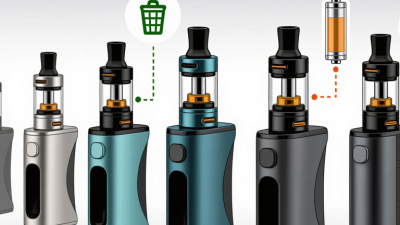
Environmental and disposal obligations Local battery, electronic-waste, packaging, and producer-responsibility rules Disposable and rechargeable products may trigger separate obligations for batteries, electronic equipment, packaging waste, recycling, and collection schemes. Market-by-market obligation assessment, recycling symbols, registration evidence where required, and disposal instructions. Market-dependent
Pre-shipment inspection Agreed purchase specification and sampling plan Inspection should cover appearance, dimensions, flavor identification, liquid fill, nicotine concentration where applicable, charging behavior, leakage, packaging, labeling, and carton quantity. Signed specification, approved golden sample, sampling standard, inspection report, photographic evidence, and release authorization. Recommended for every shipment
Buyer due diligence Commercial and regulatory verification Buyers should verify legal entity information, manufacturing-site details, product ownership, subcontracting arrangements, test-report authenticity, insurance, and export capability without relying only on catalog claims. Corporate documentation, factory audit, referenceable test laboratories, supply-chain map, contract quality agreement, and independent verification. Recommended

Note: Regulatory requirements vary by destination country, nicotine status, device format, and intended use. Standards and legislation should be checked against the current official version before product launch or shipment.

Export Capabilities, Certifications, and International Logistics

China Best Water Ice Vape Manufacturers for Global Buyers

Reliable export begins with documented factory control, not attractive product photos. Experienced manufacturers should provide batch records, ingredient specifications, and traceable production dates for water ice vape products. Buyers should review quality procedures, sampling methods, and complaint records before placing large orders. Factory audits help verify whether written procedures match daily production. They often do not match perfectly.

Certifications require careful checking. ISO 9001 can support quality management, while GMP controls may strengthen manufacturing discipline. Electrical products may require EMC, RoHS, or CE documentation, depending on the destination and product design. Battery shipments usually need UN38.3 testing, safety data sheets, and approved packaging. These documents must match the exact model, battery, and shipment. A certificate for another version is not enough.

International logistics also depends on local law. The exporter should confirm age restrictions, nicotine rules, labeling, packaging, and approved sales channels before dispatch. Customs brokers can verify tariff codes and import documents. Air freight may need special handling for lithium batteries, while sea freight often suits larger compliant shipments. Clear commercial invoices reduce delays. Still, delays happen. Weather, inspections, and changing regulations can disrupt schedules, so buyers should request realistic lead times and maintain a documented backup plan.

Comparing Suppliers for Customization, Pricing, and Long-Term Cooperation

When comparing China-based water-ice vape manufacturers, global buyers should examine more than the lowest quotation. Request product samples, factory photos, testing records, and clear material specifications. Check the mouthpiece finish, airflow consistency, battery capacity, and leak resistance. Small details often reveal production discipline.

Customization usually affects both price and timing. Buyers can discuss shell colors, logo placement, packaging structure, display screens, and flavor-free cooling designs where legally permitted. Ask for a written breakdown of tooling fees, minimum order quantities, sample costs, and delivery schedules. A low unit price may hide expensive molds or repeated revisions. That happened in one procurement review.

Long-term cooperation depends on reliable communication and measurable quality control. Suppliers should explain inspection points, batch traceability, defect handling, and replacement procedures. Confirm whether export documents and product compliance support match the destination market. Requirements differ widely, so professional legal review remains necessary. No supplier is perfect. A capable partner admits limitations and records corrective actions. Monthly production updates, stable component sourcing, and realistic forecasts can prevent urgent shipping problems. Buyers should compare total ownership cost, not only the first invoice.